How do you keep shooting outdoors when it rains and the light goes?
Keeping a flash alive in weather, the backlit rain shot that turns the problem into the picture, and what changes about exposure when the sky closes in. A method chapter: rain publishes no numbers.
KEY TAKEAWAYS
- Rain light is overcast light with a ceiling that keeps dropping: flat, even, and dimmer as the clouds thicken. Exposure is the easy part; keeping the equipment working is the real assignment.
- Treat every flash and trigger as unsealed unless its own manual says otherwise. We will not quote a weather rating we cannot source, and a plastic bag costs nothing.
- Rain becomes a picture when it is backlit: one bare flash behind the couple aimed toward the camera turns every drop into a spark. The setup is specified below.
- This is a method chapter on purpose. Nothing about rain publishes usable numbers, so what it teaches is procedure, cover, and one repeatable signature shot.
What rain does to the light
Photographically, rain is heavy overcast plus water. The cloud deck turns the whole sky into one soft source, so faces stop needing shade and directions stop mattering, exactly as in the overcast plan B. What changes is level and drift: a closing storm can pull the light down continuously, so the histogram cadence from the outdoor chapter tightens from every position to every few minutes. Colors go cool and saturated, pavement turns reflective, and by dusk a rainy venue is a genuinely dark venue, which hands you over to the mechanics of the off camera chapter sooner than the schedule promised. None of this publishes a number worth printing: cloud thickness is not on a spec sheet. Meter, check, and keep moving.
Keeping the flash alive
The honest starting assumption: your flash, your trigger, and the connection between them are not weather sealed unless the manual in your bag says they are. The manufacturer specifications we surveyed for this pillar publish output, sync, and recycle figures, and we found no rain exposure rating to quote you for a speedlight, so we will not invent one. Protection is on you, and it is cheap:
- Bag the light: a freezer bag or rain cover over flash and trigger, opening downward around the stand, gaffer taped shut. The light barely notices the plastic; the water never reaches the contacts.
- Guard the hotshoe: the joint between trigger and camera rides under your umbrella or rain cover, and a dry towel lives in an outside pocket for everything else.
- Weight the stand: wet ground plus wind is how lights die. Sandbag it, shorten it, or hand it to the most reliable person present.
- Dry before you stow: a soaked bag interior at 10pm finishes what the rain started. Towel everything before it goes back in.
The backlit rain shot
Rain earns its place in the gallery when it is lit from behind: drops between the flash and the camera catch the light and render as bright streaks against the dark. The recipe is one bare flash on a stand behind the couple, aimed back toward the camera, with the flash head itself hidden directly behind their bodies so it cannot flare the lens. The couple reads as a rim lit silhouette or, with a second front light or a touch of ambient, as a portrait wrapped in visible rain. Exposure logic: the ambient sets the background mood, the rear flash sets the rain, and the two are independent dials exactly as in the reception chapter’s shutter dragging. Start the rear flash at about 1/4 power and judge from the frame: more power, brighter rain.
Starting points
| SCENARIO | ISO | SHUTTER | APERTURE | FLASH | CHANGE THIS FIRST |
|---|---|---|---|---|---|
| Daytime rain, couple under umbrella | 800 | 1/250 | f/2.8 | None | ISO, as the deck thickens |
| Backlit rain, dusk, silhouette | 800 | 1/200 | f/2.8 | 1/4 behind couple | Rear power: more flash, more rain |
| Backlit rain + front fill portrait | 1600 | 1/160 | f/2.8 | 1/4 rear, 1/16 front | Front power, faces first |
| Covered porch, rain beyond, evening | 3200 | 1/160 | f/2.0 | 1/16 bounced under cover | Shutter, to keep the wet shine |
Starting estimates. Assumes a full frame body, fast primes, one or two manual speedlights in rain protection as described above. Rain light drifts continuously, so every row expects re checking from the histogram every few minutes, faces first where faces show.
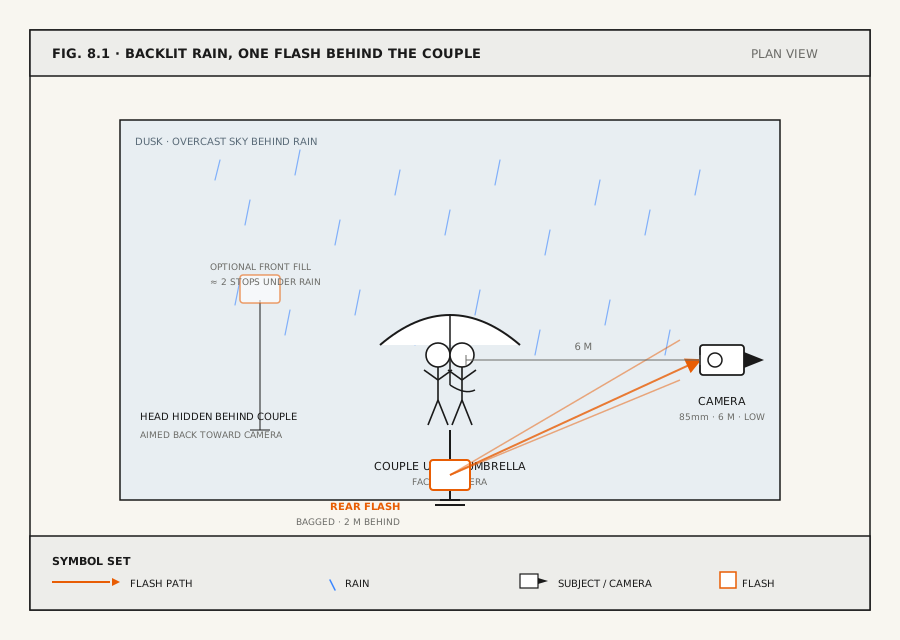
- COUPLE: standing together under one umbrella, facing camera
- REAR FLASH: bagged, on a short stand 2 m directly behind the couple
- AIM: back toward the camera, head hidden behind the couple’s bodies
- CAMERA: 6 m from couple, 85mm, low enough to keep sky behind the rain
- START: rear flash about 1/4 power, zoomed tight to spare the lens flare
- OPTION: front fill flash or ambient at about 2 stops under the rain exposure
This chapter quotes no illuminance figures and no weather ratings because none we could stand behind entered our source record: rain thickness, cloud depth, and speedlight water tolerance publish nothing usable. Where the other lighting chapters show arithmetic, this one can only show procedure, and says so rather than dressing procedure up as data. The exposure mechanics it leans on are derived and cited in chapters 3, 4, and 7.
Frequently asked
Is it safe to use flash in the rain at all?
Treat it as an electrical device in water, because it is one: battery powered speedlights at flash voltages are not the hazard mains strobes are, but soaked contacts kill units and corrupt triggers. Bag everything as described, keep the hotshoe joint dry, and if a unit does get soaked, pull the batteries and let it dry fully before it fires again.
How do I convince a couple to go out in the rain?
Show, then ask: keep one strong backlit rain frame from a portfolio or a test night on your phone, offer it as a five minute optional trip with umbrellas held by helpers, and have towels waiting. Couples decline a soggy ordeal and accept a short adventure with proof of the payoff. Never spend ceremony or reception coverage time on it.
What about drizzle too light to see in photos?
Light drizzle disappears in wide shots and shows in backlit close work, so treat it as free overcast light and protect the gear anyway: drizzle soaks equipment as effectively as rain, just slower. The backlit setup still works, it simply renders mist rather than streaks, which reads as atmosphere.